
Why Vietnam, and Why Now?
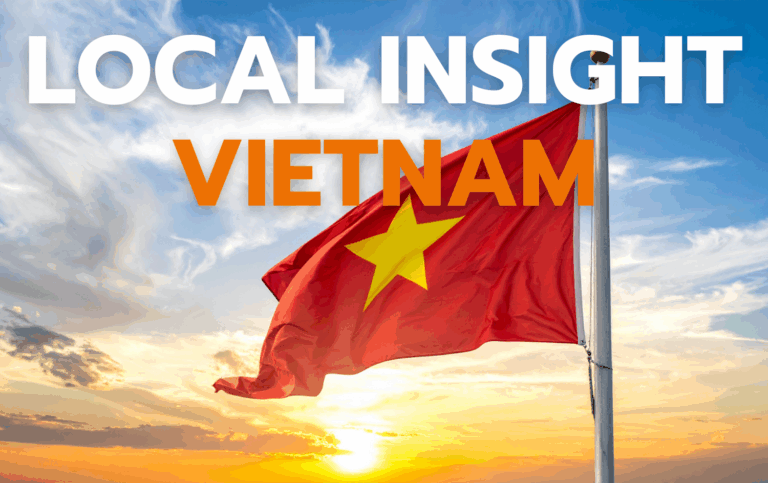
Vietnam stands at the crossroads of global supply chain diversification and Southeast Asia’s rising consumer economy.
- With a GDP growth of 8.02% in 2025
- A population exceeding 100 million
- Nearly 70% of citizens of working age
- Rapidly expanding middle class
- Strong manufacturing ecosystem
- Participation in major FTAs including CPTPP and EVFTA
For exporters, manufacturers, technology providers, and service firms, Vietnam offers both production efficiency and market demand in one ecosystem. Yet opportunity alone does not guarantee success.
Understanding the Vietnamese Market
Demographic insights: A young, ambitious nation on the move
Opportunities for Vietnam Market entry with over 100 million people and nearly 70% of the population in working age, Vietnam offers both a strong labour base and a fast-growing consumer market. Its young, tech-adaptive workforce remains cost-competitive compared to China and Thailand, while productivity and skills in manufacturing, IT, and services continue to improve.
Cultural & business considerations: Trust before transaction
Vietnam is relationship-driven. Trust, reputation, and long-term commitment matter more than quick deals. Decision-making is often consensus-based, especially in large local or state-linked firms, requiring patience and structured follow-up.
Competitive landscape: Dynamic and intensifying
Vietnam’s market is increasingly competitive. Strong domestic players dominate many traditional sectors, while multinationals expand in consumer goods, electronics, and manufacturing. The market remains value-sensitive, requiring clear positioning and often a tiered pricing strategy.
Legal and regulatory environment
Business regulations: Structure and licensing matter
While Vietnam is open to FDI across most sectors, certain industries remain conditionally restricted (e.g., logistics, education, telecommunications, distribution). Early regulatory screening is essential to avoid delays.
Licensing typically involves two key steps:
- Investment Registration Certificate (IRC)
- Enterprise Registration Certificate (ERC)
Approval timelines can be efficient in industrial zones but vary by sector and province.
Trade & Compliance requirements
Vietnam is highly integrated into global trade through multiple FTAs. However, import/export licensing, customs procedures, product certification, VAT, and Corporate Income Tax (standard rate: 20%) require disciplined compliance management. Investment incentives are available but must be properly structured from the outset.
Intellectual Property Protection
Vietnam’s IP framework has strengthened under international agreements. Early trademarks and patent registration are essential. Enforcement exists, but initiative-taking protection — through contracts, monitoring, and legal safeguards — remains the most effective risk mitigation strategy.
Vietnam’s key region
Vietnam’s strength as an investment destination is not only national — it is regional. Each part of the country offers distinct economic advantages, industrial ecosystems, and growth trajectories.
For foreign direct investors, understanding Vietnam region by region is essential to selecting the right location, optimizing cost structures, and aligning long-term strategy with local strengths.
Vietnam is not one market. It is three dynamic growth engines working together.
1. Northern Vietnam – The industrial & technology powerhouse
Key cities & provinces: Hanoi, Hai Phong, Bac Ninh, Phu Tho, Quang Ninh
Strategic advantage: Proximity to China and global electronics supply chains
Northern Vietnam is a high-tech manufacturing center integrated with Northeast Asia. Border connectivity supports efficient component sourcing, while Hai Phong Port enables strong export access.
Core Strengths:
- Electronics and semiconductors
- Precision engineering & automotive components
- Established industrial parks
- Skilled technical workforce
- FDI Insight: Ideal for technology manufacturers pursuing supply chain integration and “China+1” strategies.
2. Central Vietnam – The emerging growth corridor
Key cities & provinces: Da Nang, Thanh Hoa, Nghe An
Strategic advantage: Competitive cost base and infrastructure expansion
Central Vietnam offers lower land and labour costs, with growing industrial zones and government-backed development. Da Nang is positioning itself as an innovation and technology centre.
Core strengths:
- Deep-water ports
- Renewable energy potential
- Expanding logistics connectivity
- FDI Insight: Attractive for early movers seeking cost efficiency and long-term industrial positioning.
3. Southern Vietnam – The commercial & manufacturing engine
Key cities & provinces: Ho Chi Minh City, Dong Nai, Tay Ninh
Strategic Advantage: Mature ecosystem and largest consumer market
Southern Vietnam is the country’s economic core, combining strong domestic demand with advanced industrial infrastructure and logistics networks.
Core Strengths:
- Largest consumer market
- Advanced industrial parks
- Cai Mep–Thi Vai deep-sea port system
- Dense supplier ecosystem
- FDI Insight: Best suited for companies prioritizing rapid scale, operational depth, and regional headquarters functions.
Core entry models in Vietnam
Entering Vietnam is not a one-size-fits-all decision. The right entry model depends on your objectives, industry, investment horizon, risk appetite, and level of operational control required.
| Exporting via Local Distributor | Representative Office (RO) | Wholly Foreign-Owned Enterprise (WFOE) | Joint Venture (JV) | Mergers & Acquisitions (M&A) | |
| Suitable with | Market testing, low-risk entry, limited investment This is often the first step for SMEs and new market entrants. A local distributor handles importation, warehousing, sales, and sometimes marketing. | Market research, relationship building, sourcing supervision A Representative Office is a non-revenue generating entity. It cannot issue invoices or sign commercial contracts locally but can conduct market research, liaison activities, and supervise suppliers. | Full operational control and long-term commitment This is the most common structure for serious investors. A WFOE can trade, manufacture, provide services, and generate revenue in Vietnam. | Regulated sectors or market access via local partner In certain industries (education, logistics, distribution of specific goods, energy), partnership with a local company may accelerate licensing and access. | Rapid scale and immediate market share Acquiring or investing in an existing Vietnamese company allows immediate access to customers, workforce, and distribution channels. |
| Advantages | Minimal capital investment Faster time-to-marketLocal market knowledge and network | Low setup cost Good for long-term market observation Build local credibility | 100% ownership and control Direct invoicing and local contracts Strong brand and operational positioning | Shared risk Local network and regulatory navigation Faster market penetration | Fast market penetration Established infrastructure Existing revenue stream |
| Limitations | Limited control over brand positioning Dependence on distributor performance Potential pricing distortion | No direct sales allowed Limited operational scope | Higher setup and compliance cost Requires understanding of tax, labor, and regulatory frameworks | Shared decision-making Potential governance conflicts Alignment risks | Due-diligence complexity Cultural integration risks Valuation challenges |
| When it works best | Consumer goods, industrial components, specialized equipment where technical support is limited. | Companies exploring Vietnam before committing to a full investment. | Manufacturing, technology, industrial services, retail, and scalable business models. | Sectors requiring strong local relationships or regulatory alignment. | Retail, consumer goods, logistics, industrial services, and high-growth sectors. |
Common market entry mistakes
Despite Vietnam’s strong fundamentals, some foreign companies struggle. The reasons are often strategic, not structural.
- Underestimating relationship building
Some companies focus purely on price and efficiency. However, Vietnam operates on trust networks. Without consistent engagement, local presence, and relationship investment, partnerships may weaken quickly.
- Choosing the wrong entry model
Starting with a distributor when brand control is critical.
Setting up a WFOE without market validation.
Entering a JV without governance clarity.
Misalignment between strategy and structure creates operational friction.
- Mispricing the market
Vietnam is price-sensitive but increasingly quality-conscious. Premium brands that fail to localize pricing often struggle to scale. Conversely, competing only on price erodes margins.
- Ignoring regulatory complexity
Licensing, tax compliance, customs procedures, labor laws — Vietnam’s regulatory environment is improving but still requires structured planning. Companies that assume “it works like in other ASEAN markets” often face delays.
- Lack of local talent strategy
Hiring the wrong local management team or underestimating HR compliance can significantly slow growth. Retention, compensation alignment, and cultural integration are critical.
5 lessons that define success in Vietnam market entry
Each year, global companies announce new investments, factories, and offices across the country. Some scale smoothly and turn Vietnam into a long-term growth engine. Others struggle quietly, restructure, or exit within a few years. The difference rarely lies in capital or ambition. It lies in how companies enter.
After years of observing foreign investors on the ground, five lessons consistently separate success from frustration.
- The best entries begin long before the company is registered
In Vietnam, registration is not the starting point — strategy is. Companies that define Vietnam’s role, target customers, and decision structure early turn their legal setup into a growth engine, not a future constraint.
- Where you enter matters as much as how you enter
Vietnam is three distinct economic ecosystems, not one uniform market. The right city or industrial zone can accelerate growth — the wrong one can quietly slow it.
In Vietnam, location is strategy.
- Early compliance decisions shape future freedom
Tax, licensing, and customs decisions made on day one shape flexibility later. Smart investors design compliance strategically — because done right, it safeguards scale and profitability.
Done right, compliance does not slow growth. It protects it.
- Vietnam performs best when leadership is trusted locally
Vietnam rewards empowered local teams. Clear governance with real decision authority drives speed, retention, and execution — micromanagement does not.
- Vietnam favors those who stay
Vietnam opens itself gradually to committed investors. Those who stay, adapt, and reinvest build relationships and resilience that short-term players cannot replicate.
How ALTIOS International helps international companies succeed in Vietnam
Entering Vietnam is not difficult.
Succeeding in Vietnam is.
The country offers exceptional growth potential, but it also demands strategic clarity, local intelligence, and disciplined execution. International companies that thrive here do not rely on luck — they rely on structure, preparation, and trusted guidance.
At ALTIOS, we support international companies at every stage of their Vietnam journey — from strategic assessment to operational execution — ensuring that expansion is not only possible, but sustainable. Vietnam offers extraordinary opportunity for companies that enter with the right partner, the right preparation, and the right mindset.
We help you move from opportunity to performance — and from entry to long-term success.
FAQ: Market Entry in Vietnam
Why are international companies increasingly choosing Vietnam for expansion?
Vietnam has emerged as a strategic alternative for global manufacturing and regional headquarters due to its strong economic growth, competitive workforce, and integration into global trade agreements such as the CPTPP and EVFTA. Companies benefit from both cost-efficient production and access to a fast-growing domestic market, making Vietnam suitable for both export-oriented and market-driven strategies.
What is the best market entry structure for foreign companies in Vietnam?
The optimal structure depends on the company’s objectives, investment horizon, and required level of operational control.
1. Distributors are suitable for initial market testing
2. Representative Offices support market research and supplier supervision
3. Wholly Foreign-Owned Enterprises (WFOE) enable full operational control
4. Joint Ventures help navigate regulated sectors
5. Acquisitions allow rapid market entry and scale
Companies planning long-term manufacturing or commercial operations typically choose a WFOE.
Which regions in Vietnam are most suitable for foreign investment?
Vietnam operates through three major economic regions, each offering distinct advantages:
1. Northern Vietnam is ideal for electronics, engineering, and export manufacturing due to proximity to China and established industrial clusters
2. Central Vietnam offers lower operating costs and long-term industrial development potential
3. Southern Vietnam is the country’s economic center, best suited for large-scale manufacturing, commercial operations, and regional headquarters
Location selection significantly impacts operational efficiency, cost structure, and growth potential.
How complex is the regulatory and licensing process in Vietnam?
Foreign investors must obtain two primary approvals:
1. Investment Registration Certificate (IRC)
2. Enterprise Registration Certificate (ERC)
Approval timelines vary depending on sector, location, and project scope. Additionally, companies must comply with tax regulations, customs procedures, and labour laws. Early regulatory planning helps avoid delays and ensures smoother operational setup.
What are the most common mistakes foreign companies make when entering Vietnam?
The most frequent challenges arise from strategic misalignment rather than market conditions. Common mistakes include:
1. Selecting the wrong entry structure for long-term objectives
2. Underestimating the importance of local relationships and trust-building
3. Choosing locations without aligning with supply chain and talent needs
4. Insufficient regulatory and compliance planning
5. Lack of strong local leadership and talent strategy
Companies that approach Vietnam with long-term commitment and structured planning are more likely to succeed.
Fact Box
| Economic Fundamentals | 1. GDP Growth: 8.02% (2025) 2. Population: Over 100 million 3. Working-age population: Approximately 70% 4. Corporate Income Tax: Standard rate of 20% |
| Strategic Advantages | 1. Major global trade agreements: CPTPP, EVFTA 2. Strong manufacturing base across electronics, automotive, and industrial sectors 3. Competitive labour costs compared to China and Thailand 4. Strategic location within Southeast Asia supply chains |
| Key Investment Regions | 1. North: Electronics, semiconductors, precision manufacturing 2. Central: Cost-efficient industrial expansion and emerging industrial zones 3. South: Commercial hub, mature infrastructure, and largest consumer market |
| Most Common Entry Structure | 1. Wholly Foreign-Owned Enterprise (WFOE) for long-term manufacturing and commercial operations |
| Typical Market Entry Timeline | 1. 2–4 months depending on sector, licensing requirements, and location |