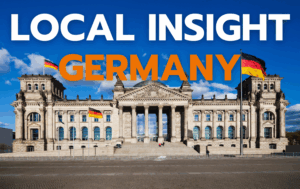
Why Hiring in Germany Is Different
Germany is one of the most attractive markets for international companies, but recruitment often turns out to be more complex than expected. Many challenges are not obvious at first glance and are closely linked to local market conditions, regulations and cultural expectations. Cultural differences in the behaviour of candidates and companies can be challenging, even between neighbouring countries: France/Germany, Poland/Germany or Italy/Germany.
Recruitment in Germany is less about speed and more about credibility. Companies that understand the local mindset and adapt their recruitment strategy accordingly are far more likely to attract and retain the right talent.
The German Job Market (What to Expect)
In many sectors, Germany is clearly a candidate-driven market. Skilled professionals, especially in IT, engineering, healthcare and technical roles can choose between multiple offers. As a result, recruitment timelines tend to be longer and expectations higher.
Candidates usually value:
• Job security and long-term stability
• Development opportunities
• Clear roles and responsibilities
• Transparent compensation
• A healthy work-life balance / Flexibility
• Experience is more important than academic qualifications (for employer)
Aggressive or overly sales-driven recruitment approaches often do not resonate well. The principle of give and take is strong, and the fit between company and candidate must be mutual.
A win-win approach is very common in Germany, benefiting both the candidate and the company. For a sustainable, long-term working relationship, the willingness to commit to the role must come from both parties.
- While virtual meetings are widely used, an in-person meeting is strongly recommended to demonstrate initial commitment and genuine interest.
Culture That Wins (or Loses) the Hire
German recruitment processes are typically structured and formal. Job descriptions are expected to be precise, and qualifications, certificates and experience play an important role.
From a candidate point of view, it is not customary to oversell yourself or pretend that the position is your only priority or choice.
During the interview:
• Communication is usually direct and factual
• Candidates tend to appreciate honesty over enthusiasm
• Overpromising can quickly create distrust
• Reliability, clarity and consistency are key factors throughout the hiring process
• Candidates do not make hasty decisions
• It is useful to provide a clear context and outline the agenda for the exchange: presentation of the company, duration, questions at the end, etc.
• Talking about money is not taboo at all: salary must be discussed, in order to avoid wasting the company’s and the candidate’s time
Employment Contracts & Compliance Essentials
International companies must ensure compliance with:
1. Legal Framework & Labor Law
- Compliance with German labor law, including statutory minimum wage (€12.82 per hour as of 2026)
- Employment relationships are only legally binding once a formal employment contract is signed
- There is no legally recognized “letter of intent” or promise of employment under German law
- Both the employer and the candidate may withdraw prior to contract execution without legal consequences
2. Social Security & Registration
- Social security registration: employees must be covered by health insurance, either under the public statutory system or a private health insurance scheme.
- In Germany in 2026, 90% of people are registered with public insurance, compared to 10% with private insurance.
3. Working Time Regulations
- Standard working time: 40 hours per week
- Typically structured as 8 hours per day over 5 working days
- Subject to the German Working Time Act (Arbeitszeitgesetz)
4. Leave Entitlement
- Statutory minimum of 20 days of paid annual leave for full-time employees based on a 5-day workweek
- In practice, most employers grant 26–30 days of annual leave
5. Notice Periods
- Statutory minimum notice period: 4 weeks
- Notice periods may increase depending on seniority, role, and contractual agreements
- In practice, 3 months’ notice is common; 6 months is not unusual for senior roles
Employment contracts in Germany (must include)
- Scope + responsibilities
- Working time/location/home-office details
- Salary structure (fix + variable)
- Leave/benefits
- Notice period + probation: exact dates
What foreign companies often underestimate
- No “promise letter” security – contract execution matters
- Notice periods can be long (often 3–6 months)
- Onboarding can take up to 6 months
Legal Framework: What Is Optional – But Makes a Difference
Beyond legal requirements, companies that succeed in Germany usually invest in and build up on:
- A locally adapted employer brand
- Clear and realistic salary structures
- Well-organized onboarding: up to 6 months
- Transparent internal communication
- The hierarchy is less strict: more cross-functional communication than vertical communication Even in large international organisations, companies try to adapt to the country and often require A1/A2 or higher German language proficiency (especially in engineering sectors)
- These elements are not mandatory, but they strongly influence employer attractiveness and retention.
- Organisation & Clarity: Upfront planning of the coordination framework between the employee and the employer is essential, particularly when the employee is based alone in Germany or when their direct manager is not located on site.
- Employees typically seek clarity on the organizational setup, including the frequency of travel to headquarters and the expected reporting structure.
- For this purpose, the employer should have a clear coordination and communication plan in place to share with the future employee.
Recruitment Services: Access to Local Talent
Recruitment services provided by agencies in Germany serve two main purposes:
- Identifying the future employee
- Acting as a bridge between the foreign company and the employee.
This includes facilitating communication, conveying expectations and requirements from both sides, and ensuring mutual understanding.
The recruitment market in Germany in 2026 is challenging, and employees tend not to make rushed decisions.
The search for the ideal candidate can take three months or longer. It is common to approach candidates who are already employed, which often extends the recruitment process.
For foreign companies, working with a recruitment service provider allows this upfront search and approach work to be handled externally.
What we do at Altios Germany
Kick-off & Briefing
- Collaborative session to understand company culture, role requirements, and expectations.
Defining Criteria
- Clear definition of required skills, experience, and behavioural traits to guide the search.
Job Offer Design
- Creation of a market-aligned, compelling job offer to attract the right candidates.
Sourcing & Shortlisting
- Proactive sourcing of candidates with delivery of a curated shortlist, early validation through anonymized CVs.
Structured Interviews
- First round: verification of skills and experience
- Second round: assessment of cultural fit, team alignment, and real-life scenarios
Check-ins & Transparency
- Regular updates with clear reporting and feedback opportunities. Focus on candidate quality and long-term match, while protecting employer brand.
Timeline
- Kick-off to finalized job description: ~2 weeks
- Candidate selection goal: within 3 months
Why our approach stands out
We focus on quality over quantity, ensuring that each candidate is a strong, long-term match. Our process protects your employer brand and provides a professional, structured experience for both you and the candidates.
Germany Hiring Checklist
- Role clarity + realistic salary band
- Structured interviews + candidate communication cadence
- Contract readiness + notice period planning
- Onboarding plan (30-60-90)
- Choose setup: Local entity
What the “Right Support” Looks Like in Germany
Hiring in Germany works best when you combine strong recruitment execution with the structure to onboard and retain talent.
If you’re entering the market, it can help to work with a partner like Altios that supports Recruitment (finding and assessing the right profiles)
Navigating hiring in Germany requires local expertise, cultural understanding, and regulatory precision.
With a full local team in Germany, Altios supports foreign companies across recruitment, compliance, and market-entry execution. Reach out to explore how we can help you hire and scale effectively.
FAQ
Is Germany a candidate-driven market?
Yes – in many sectors such as IT, engineering, healthcare, and technical roles, skilled professionals often have multiple offers, making hiring competitive.
As a result, recruitment cycles are longer and companies must focus on credibility, structure, and alignment rather than speed.
What do German candidates value most?
Candidates typically prioritise job security, long-term stability, transparent compensation, clear responsibilities, and work-life balance.
They also expect realistic development opportunities and value mutual fit between employer and employee.
What cultural mistakes should foreign companies avoid in hiring?
Overly aggressive selling, vague job descriptions, or overpromising during interviews can quickly erode trust with German candidates.
Employers should prioritise clarity, honesty, structured communication, and realistic expectations throughout the process.
Fact Box
| Topic | Hiring in Germany for foreign companies |
| Market | Candidate-driven in skilled sectors; longer timelines |
| Candidate Priorities | Stability, clarity, transparent pay, development, work-life balance |
| Culture | Structured process; direct communication; don’t oversell; discuss salary early |
| Contracts | Contract execution matters; long notice periods; onboarding can take months |