1. UAE and KSA: The Gulf’s Power Axis
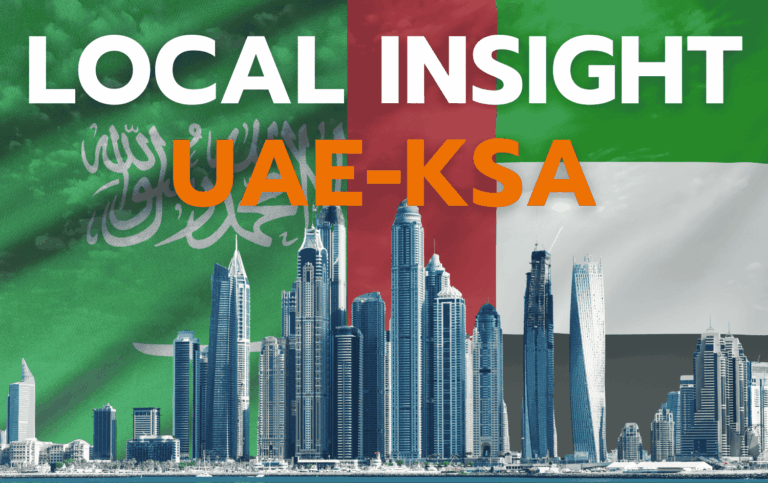
The Gulf has always been a high-growth story, but Saudi Arabia and the UAE are now moving from being two strong markets to acting as a connected economic corridor. When examining the data, the shift is unmistakable. According to the UAE Ministry of Economy, non-oil foreign trade increased by 18.6% in the first quarter of 2025. Saudi Arabia’s statistics authority reported a 30.4% surge in non-oil exports to the UAE in July 2025 alone. Machinery and electrical equipment now account for nearly a third of those flows.
That is not a coincidence; it is the result of two economies pushing hard to diversify, modernise, and compete for global attention. The UAE is doubling down on its role as the logistics gateway for the region. Saudi Arabia is scaling its industrial base under the “Made in Saudi” program, which multiple government releases highlight as a driver of non-oil export growth. Together, they form the economic spine that carries most of the GCC’s non-oil activity.
The dynamic today is what regional analysts call “cooperative competition”. On the one hand, you see joint committees, aligned customs processes, and pilot versions of shared visas on one side. On the other hand, you know the race for corporate headquarters. Saudi Arabia’s Regional HQ program, as confirmed by the Saudi Ministry of Investment, surpassed 540 multinationals in Riyadh in 2025. Dubai is responding by strengthening its own ecosystem and maintaining its grip on logistics and services.
For international companies, this corridor isn’t a choice between two markets. It’s an opportunity to design one launch that works across both.
2. A Single Corridor, Two Very Different Engines
Saudi Arabia and the UAE aren’t converging into one market. They’re aligning, and that’s a crucial distinction for any leadership team planning expansion.
Saudi Arabia is the region’s scale engine. Industrial diversification, significant government spending, and an expanding consumer base mean more long-term demand. The Saudi Export Development Authority regularly highlights the country’s growing manufacturing capabilities, particularly in mechanical and electrical goods that are exported to the UAE for re-export.
The UAE, confirmed by data from Dubai Customs and the Federal Competitiveness and Statistics Centre, remains the region’s re-export hub. Global goods still arrive in Jebel Ali or Abu Dhabi before being transported into Saudi Arabia. Technology, consumer electronics, and premium categories continue to rely on the UAE as their gateway.
Both markets are complementary, but the rules of engagement differ. Saudi Arabia prioritises local presence and long-term credibility. The UAE prioritises speed, openness, and cross-border trade. The corridor strategy lets you benefit from both models without splitting your resources.
3. Trade Agreements and Strategic Benefits
The KSA–UAE corridor isn’t just physical; it’s also regulatory and financial. Both countries sign trade agreements and related policies to lower barriers, provide tariff and tax advantages, and create predictable rules that simplify market entry for international firms.
The UAE’s Comprehensive Economic Partnership Agreements (CEPA) program has, in many cases, eliminated or sharply reduced tariffs on up to 99% of goods, while also providing commitments on services, logistics, e‑commerce, and investment protection. These frameworks enable foreign companies to establish production or regional headquarters in the UAE, benefiting from preferential access to GCC and fast-growing Asian and African markets, as noted by Investopia and Bizvisor (2025).
In Saudi Arabia, Vision 2030-linked programs combine investment liberalisation with localisation requirements. The Regional HQ program, local content incentives, and “Made in Saudi” industrial initiatives encourage firms to establish a deeper on-the-ground presence, rewarding those that align operations with government priorities. Together, the UAE’s CEPA network and Saudi Arabia’s local incentives create a powerful dual-lever strategy: firms can base finance, IP, and regional management in the UAE while establishing operations, manufacturing, or contracting in Saudi Arabia to access the Kingdom’s growing market. This integrated approach is further enhanced by the UAE–Saudi bilateral tax treaty and each country’s broader network of double taxation agreements, which streamline cross-border cash flows, reduce withholding taxes, and improve repatriation efficiency, thereby providing international businesses with financial certainty and operational flexibility.
4. What an Integrated Gulf Strategy Looks Like
A one-country approach slows you down. A corridor strategy gives you leverage.
- One Market Entry Narrative
Executives want a clear business case they can take to a board meeting without sounding tentative. Export Directors want a GTM blueprint they can operationalise on Monday morning. The corridor approach delivers both: one rationale and one investment logic, two markets addressed in parallel.
- Shared Ecosystem Mapping
Distributors, integrators, regulators, and technical agencies rarely operate in isolation. Many serve both markets, and their feedback helps you shape the offer localisation from day one.
- Combined Competitive Intelligence
Competitors don’t play a “KSA-only” or “UAE-only” game. They build Gulf-wide positions. A single intelligence effort across both markets provides you with better pricing benchmarks, channel clarity, and early visibility on white spaces.
- Harmonised Product-Market Fit Testing
The UAE allows you to test your offering quickly. Saudi Arabia tests your scalability. Companies that understand this sequence avoid premature investments and reduce go-to-market risk.
5. Why Companies Lose Time (and Money) When They Split the Two Markets
Treating Saudi Arabia and the UAE as two separate expansions creates predictable friction.
Duplicated Assumptions
Two budgets. Two demand forecasts. Two parallel internal debates. This is exactly the kind of complexity that delays decisions and weakens internal alignment.
Team Overstretch
Export Directors know this too well. Without a corridor strategy, they end up managing twice the workload with the same resources, while executives expect “regional results” anyway.
Lost Timing Advantage
As analysts from both ministries continue to state, non-oil growth is accelerating. Companies that wait to “finish the UAE” before “starting Saudi” risk losing competitive visibility in both.
6. Designing a Corridor-Based Market Entry Strategy
Here’s where corridor thinking becomes operational.
Map the Corridor First
Before segmenting countries, it is essential to understand the cross-border realities: logistics, customs, routes, ecosystem overlaps, and regulatory shifts. For example, the GCC’s integrated 12-digit tariff code, rolled out across KSA and UAE customs platforms in mid-2025, is a concrete sign of alignment. It reduces misclassification disputes and border delays.
Prioritise the Launch Country Based on Function, Not Comfort
Most companies launch commercially in the UAE because it is a fast-growing market. Many anchor long-term revenue in Saudi Arabia because that’s where scale sits. The right choice depends on where your buyers, incentives, and compliance pathway create the best starting point.
Build a Dual-Track Partner Strategy
One corridor, two roles. You may need a testing partner in the UAE and an industrial or distribution partner in Saudi Arabia. Some partners cover both, but they rarely play the same role in each country.
Align the Value Proposition
Saudi buyers prioritise localised presence and compliance assurance. UAE buyers prioritise speed, innovation, and service. The product may be the same, but your positioning can’t be.
Prepare Internal Teams for One Push
Finance, HR, operations, and legal all get involved when the corridor is your playground. Clarity on compliance (Saudi RHQ rules versus UAE corporate framework) helps you avoid last-minute restructuring.
7. What Success Looks Like: Fast Momentum Without Losing Control
A successful Gulf corridor strategy provides leadership confidence and gives the operational teams a direction.
Clear Go/No-Go Points
With non-oil trade growing at double-digit rates, boards want clarity. Market-entry checkpoints, backed by real interviews and verified data, provide defensible decisions.
Local Insights Over Desktop Assumptions
Every ministry and authority in both countries emphasises that regulations move quickly. Only on-the-ground conversations reveal the truth behind timelines, approvals, and distribution capacity.
Early Commercial Signals
A few targeted conversations with the right buyers or partners often validate your market assumptions better than any broad survey. Momentum is a strategic asset.
8. How ALTIOS Helps You Make the KSA–UAE Corridor Work for You
You can’t navigate this corridor with desktop knowledge. You need people on the ground who understand how both markets actually work together.
Local Presence, Real Access
Our teams in Riyadh and Dubai operate within the ecosystems where your decisions take shape. When ministries adjust rules or border processes shift, we know early because we’re already working with local stakeholders.
Ecosystem-Led, Interview-Driven Insights
Our work is built on conversations with buyers, partners, regulators, and sector experts. That’s what gives CEOs credible evidence for internal alignment and gives Export Directors an actionable plan instead of a theoretical document.
One Team for Both Markets
No duplicate projects. You get one roadmap, one methodology, and one cross-border strategy, built with on-the-ground intelligence from both sides of the border.
Strategy With Execution Behind It
We help you validate your position, find the right partners, hire local talent, set up subsidiaries, and manage operational compliance. Businesses work with us because insights without execution don’t build revenue.
Compliance and Mobility Guidance
Whether you’re navigating Saudi RHQ regulations, UAE operating frameworks, or preparing for the upcoming Unified GCC Visa, we help you plan and avoid last-minute surprises.
Businesses expanding across the corridor don’t need two projects. They need one well-designed strategy supported by a team that knows both markets from the inside.
9. Conclusion: The Gulf Rewards Companies That Think Regionally
The KSA–UAE corridor is no longer an emerging idea. The trade numbers, infrastructure upgrades, customs reforms, and coordinated committees all point to the same trajectory. This is becoming one of the world’s most dynamic non-oil trade zones.
Companies that design a corridor strategy scale faster, de-risk their investments, and secure early wins in two of the most attractive markets in the world. Companies that treat them separately end up spending more time, more budget, and more internal capital than they need to.
The opportunity is real, and the timing is strong. The corridor is open for businesses that know how to navigate it.